SCORE & NegoDesign Game
Summary
A Dockerized, real-time multiplayer web game built to simulate urban planning scenarios. It enables participatory spatial decision-making for Ecosystem-Based Approaches and community co-creation.
Overview
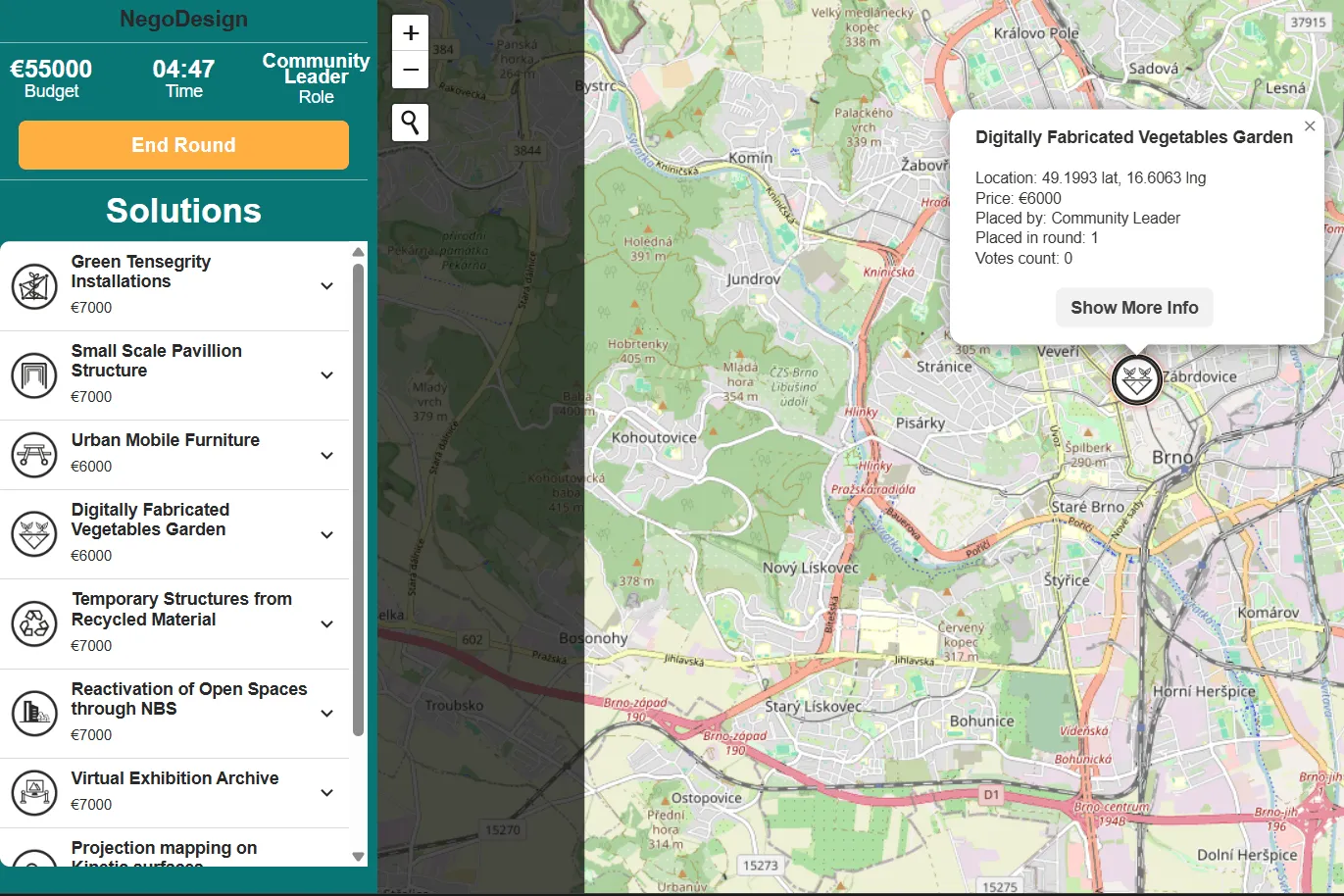
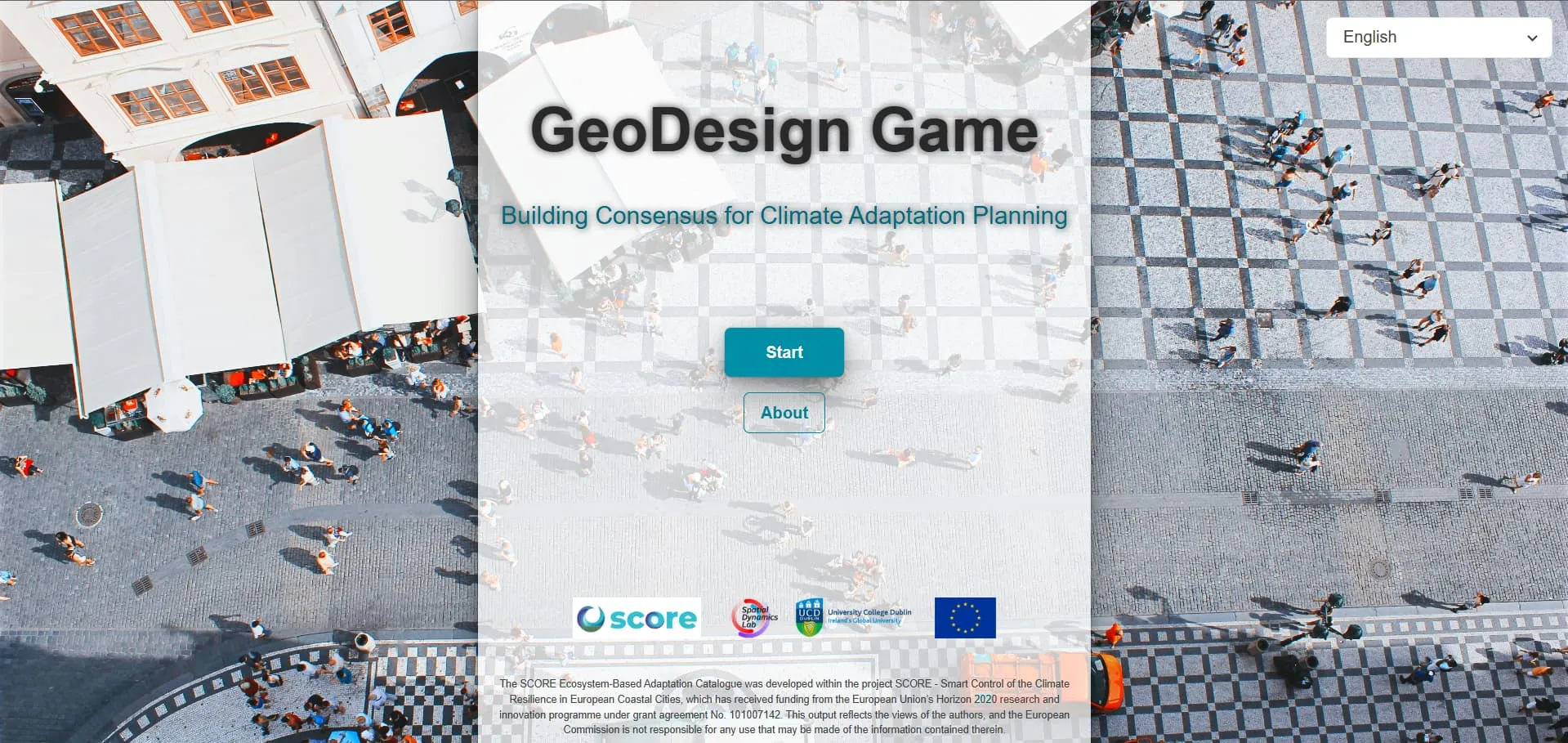
The Geodesign Game is an interactive, digital open-source tool designed to simulate complex urban planning scenarios. Created in close collaboration with urbanists from University College Dublin (UCD), the platform was presented at 2nd Geogames Symposium.
Rooted in Geodesign and Serious Gaming principles, the platform facilitates participatory spatial decision-making by bringing together communities, local authorities, and stakeholders with conflicting perspectives. Participants take on various roles to propose, discuss, and vote on localized solutions. By working collaboratively in a shared digital environment, the game fosters a deeper understanding of planning complexities and encourages innovative, community-driven development.
Dual Application: SCORE & HERITACT
The flexible architecture of this platform allowed it to serve as the core engine for two distinct European research initiatives:
- SCORE Project: Focused on implementing Ecosystem-Based Approaches (EBA) in coastal cities. The game allows users to tailor resilience strategies to specific ecological, social, and economic needs.
- HERITACT Project (NegoDesign): Deployed as a digital negotiation tool in three pilot sites (Eleusina, Milan, and Ballina) to engage communities in co-creating design solutions for spatial decision-making around cultural heritage and urban spaces.
Technical Architecture
I designed and implemented this project from the ground up as a Dockerized real-time multiplayer web game using a strictly typed TypeScript monorepo. The architecture is highly focused on real-time synchronization, resilient reconnect logic, and a clean production deployment model.
Server-Authoritative Backend
The core of the multiplayer game engine lives in a Node/Express backend that acts as both the API and the WebSocket host.
- Unified Process: The backend owns the game session lifecycle. It starts Express, attaches Socket.IO to the same HTTP server, and serves the built production client bundle from the exact same process.
- State Management: Real-time multiplayer rooms are centrally managed with robust join/leave, reconnect, and cleanup logic. Game progression is explicitly modeled with serializable states covering the lobby, active round stages, voting, and game completion.
- Server-Side Validation: All map interactions and countdown timers are stateful and validated server-side, preventing client desynchronization or manipulation.
Dynamic React Frontend
The client application is built with React and Vite, structured cleanly around context providers and dynamic screen states. To accelerate development and foster team growth, I also supervised and mentored an intern who actively contributed to building out the frontend components.
- Resilient Reconnections: To ensure product quality during live workshops, player identity mapping is reconnect-safe. A stable player ID is stored in browser storage, allowing users to seamlessly drop back into their exact game state if their connection drops.
- Interactive UI Stack: The interface leverages Chakra UI for accessible and responsive components, and Leaflet for the interactive, map-based flow crucial to the Geodesign process.
- Global Accessibility: Designed for pan-European deployment, the frontend utilizes i18next for comprehensive internationalization and multilingual support.
Summary
This project demonstrates how complex, real-time architectures can be packaged into accessible, user-friendly serious games. By keeping the server authoritative and focusing on resilient connections, the platform successfully abstracts the technical complexity away from the end users, allowing them to focus entirely on community collaboration and urban planning.
In 2026, the project is still actively maintained by the UCD team and serves as a foundation for their research and development in participatory urban planning tools.