Invenio VR Stress Tool
Summary
A clinical VR research tool for Meta Quest 3 designed to induce and measure cognitive stress to help build diagnostic tools for gifted children.
Overview
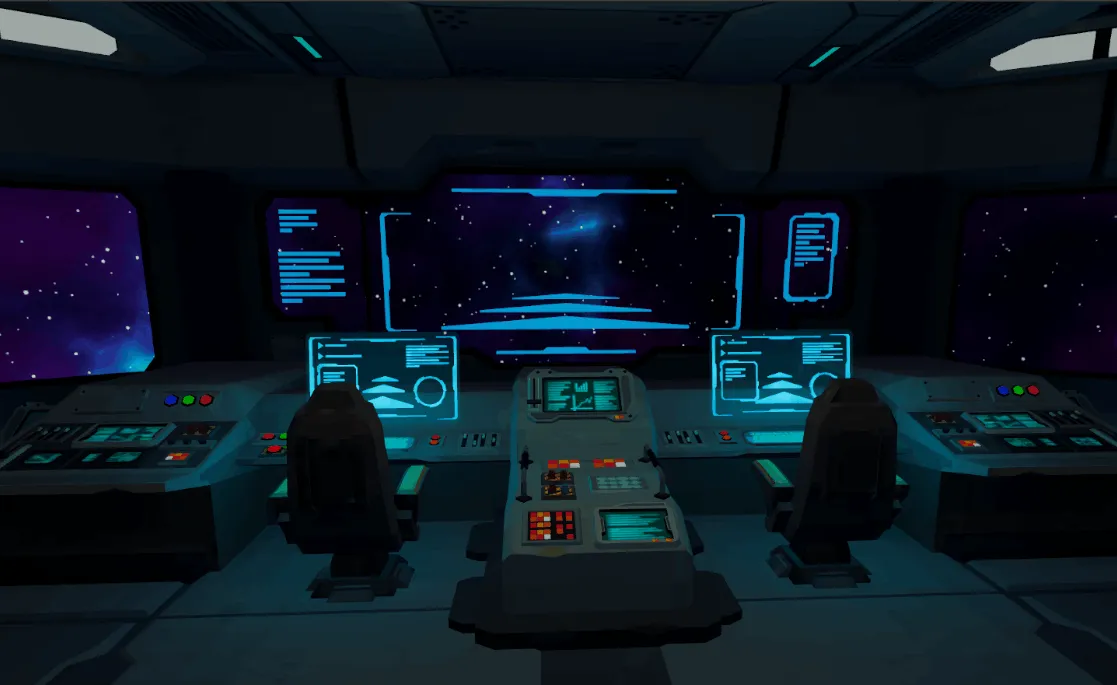
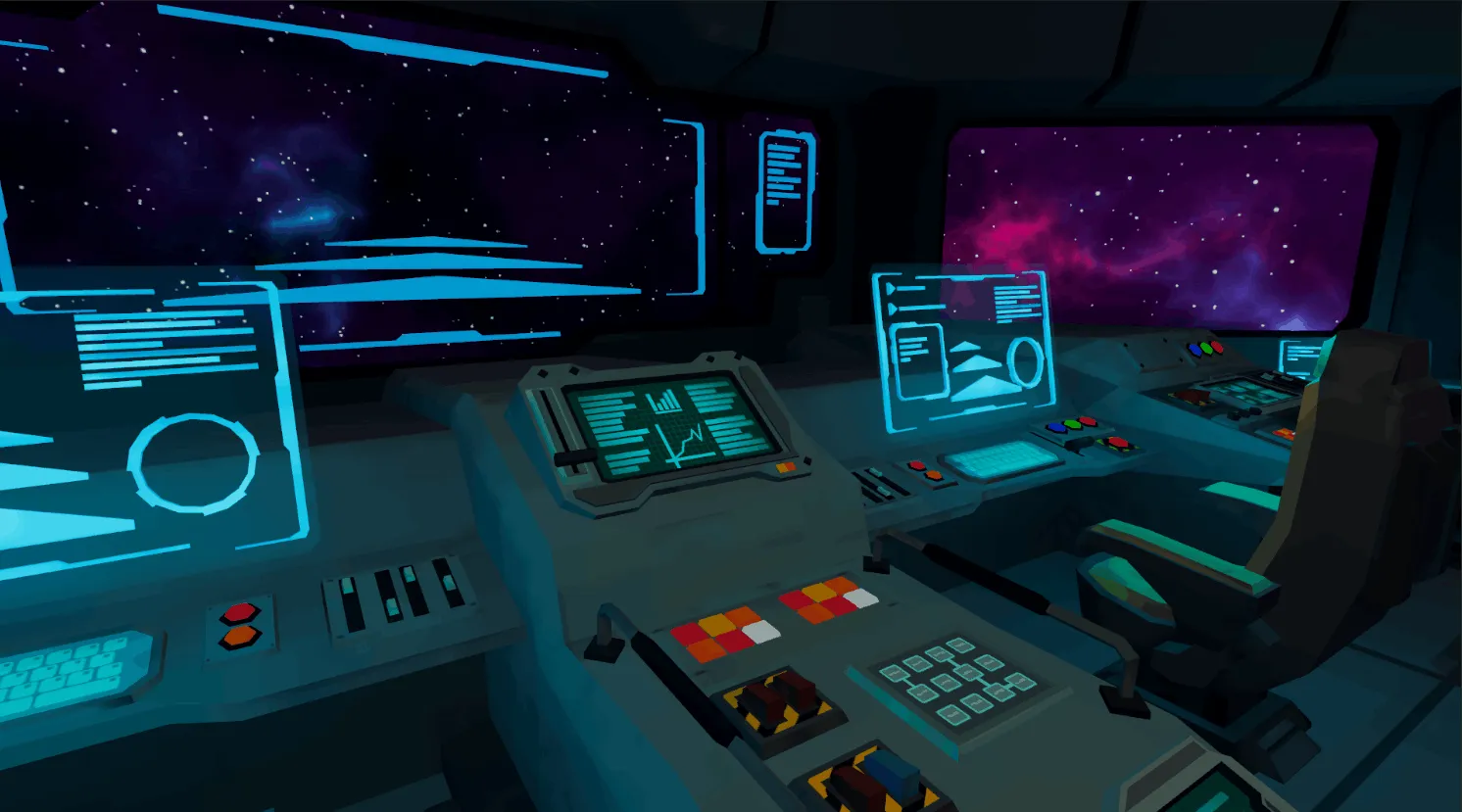
Created for Invenio — the National Center for Gifted Support, this VR application is used in research conducted at the Jacob Hansen Research Station. Designed as a futuristic spacecraft simulation, its primary purpose is not entertainment, but to serve as a clinical research tool. The study observes how adolescents from the general population (ages 13–15) react to cognitive load in virtual reality, starting with a calming baseline phase followed by cognitive tasks of varying difficulty. During the entire session, the participant wears smartwatches that non-invasively record their heart rate and skin conductance.
The goal of the broader research is to gather consistent, high-quality data on youth stress processing and establish a baseline to better understand gifted children. Gifted children often experience stress differently — their intellect can significantly outpace their emotional maturity, leading to unique anxieties. By correlating their in-game performance with the physiological data, we aim to build a standardized diagnostic tool to formulate better psychological recommendations.
My Role
I was responsible for the entire lifecycle, serving as the sole designer and developer. Working closely with a team of psychologists from Invenio and external physiological researchers, I translated their clinical requirements into an engaging, cohesive VR experience from scratch.
- Game & UX Design: Designing a sci-fi cockpit that accommodates standardized psychological testing without breaking immersion.
- Engineering: Developing the application in Unity for the Meta Quest 3 (Standalone).
- Data Pipeline: Implementing precise microsecond logging of stimuli and reaction times for post-processing with biometric sensors.
The Experience: A Stressful Space Mission
To ensure that the results of different respondents were comparable, the experience had to be fully deterministic. The scenarios, timings, and intervals are strictly fixed.
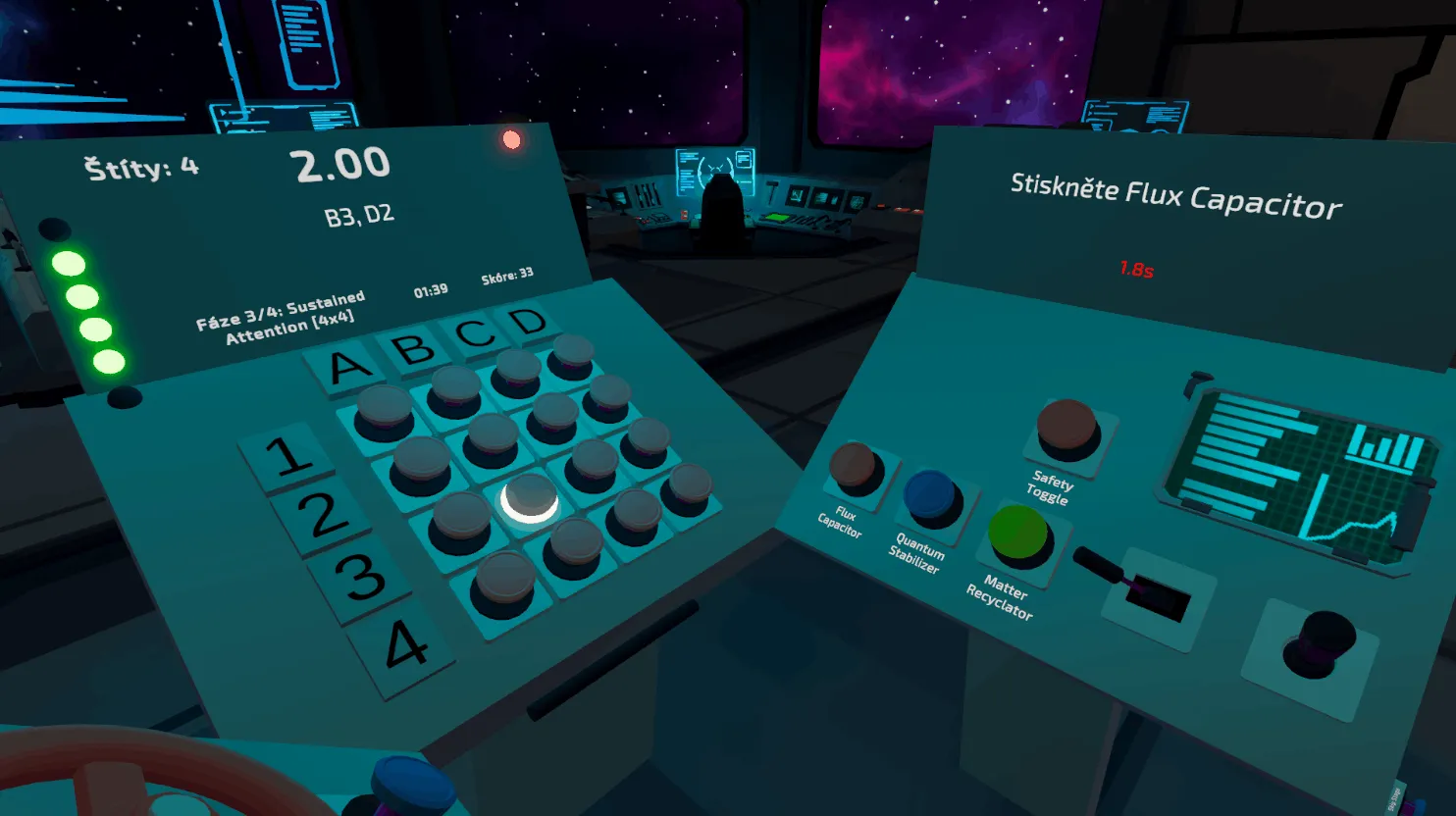
The user steps into the role of a pilot managing a spacecraft through a central grid panel and side secondary panels. To prevent physical movement from introducing noise into the physiological data, the experience is fully seated with an adjustable virtual desk height. Additionally, the application contains a comprehensive interactive tutorial that explains all controls and mechanics. This ensures that even the learning and instruction phase is entirely deterministic and consistent across all participants during user testing.
Game Mechanics & Cognitive Load
The application utilizes several distinct mechanics to test different cognitive functions:
- Coordinate Tasks: The user presses buttons on a central scalable matrix (e.g., A1, B2) based on visual prompts.
- Multi-Input: Users must sometimes press multiple buttons in any order.
- Dual-Tasking: While managing the main grid, players must react to peripheral sensory cues (like an increasing alarm sound or a light indicator) to maintain their ship’s shields.
- Progressive Stressors: The difficulty escalates over the 8-12 minute stress loop phase by scaling up the grid size and significantly increasing the frequency of the tasks, intentionally overwhelming the users.
Technical Details
Platform: Meta Quest 3 (Standalone, eliminating the need for a tethered PC setup).
Architecture: Unity with a deterministic timeline manager. The UI features scalable grid panels (expanding from 2x2 up to 4x6 depending on the difficulty phase) and interactive VR controls (levers, dials, buttons, sliders).
Configurable Scenarios: The application is built flexibly, allowing us to easily create new scenario timelines from configuration files, making it simple to adjust timings, stressors, and the overall design of the testing.
Analytics Layer: Developed a robust background logging system that records millisecond-accurate timestamps for every stimulus, user reaction, and error type (e.g., distinguishing between a missed button vs. pressing the wrong coordinate). This data is stored locally in CSV format and later synchronized with external physiological monitors.