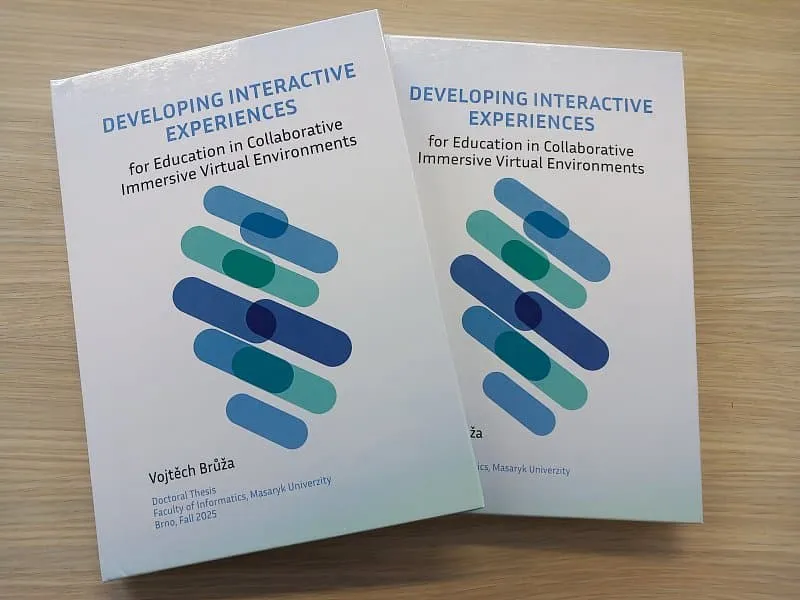
PhD Dissertation
Summary
A comprehensive monograph and research framework addressing the complete development pipeline for collaborative immersive virtual environments (CIVEs) in education, focusing on experiential learning and interactive design.
Overview
“Learning by doing” is a foundational educational philosophy emphasizing that knowledge and skills are best acquired through active experience and reflection. My dissertation explores how Virtual Reality (VR) synergizes with this concept. VR extends beyond mere visual presentation, enabling learners to actively interact within multi-sensory scenarios — fostering deep connections between abstract concepts and memorable, hands-on experiences.
The Challenge
While VR’s educational potential is widely recognized, many current implementations fail to harness its interactive capabilities, relying heavily on passive 360-degree videos or static 3D model viewers.
The true transformative power of immersive technology in education lies not merely in high visual fidelity, but in creating dynamic, collaborative spaces where students experiment, make mistakes, and build knowledge through engaging mechanics. The core challenge is transitioning learners from passive observers to active participants.
Research Aim & Vision
Working at the intersection of computer science, psychology, pedagogy, and design, this research addresses the end-to-end development lifecycle of educational virtual environments — spanning design conceptualization, technical architecture, and real-world deployment.
Employing a Research Through Design (RtD) methodology, the overarching vision is to establish VR as a scalable platform for collaborative education by providing clear guidelines on user experience, networking architectures, dynamic spatial audio, and interactive logging systems.
Key Contributions
Rather than relying solely on theoretical models or isolated lab tests, this research treats the developed platforms themselves as primary research artifacts, validated through real-world classroom and workshop deployments:
- VRdeo: An immersive video authoring and playback tool featuring a dynamic pause system for 3D exploration and role-based authoring for asynchronous learning.
- eDIVE: A modular collaborative VR framework built in Unity that lowers technical barriers for developers and educators constructing customizable multi-user scenarios.
- EbAcraft: A serious game built in Minecraft that leverages widespread gaming infrastructure to communicate ecosystem-based climate adaptation concepts across 11 European languages.
Collectively, this monograph bridges the gap between theoretical pedagogy and practical implementation, advancing the state of collaborative virtual environments for education.
Context & Academic Journey
This dissertation represents the culmination of my doctoral research at the Faculty of Informatics, Masaryk University (FI MU) from 2019 to 2026. Early in this journey, in 2022, I was awarded the RNDr. (Rerum Naturalium Doctor) degree — an advanced academic doctorate title awarded in Czechia following a rigorous state examination.
Then I kept working on my research and completed the writing of this dissertation at the end of 2025 and successfully defended it on July 2, 2026.
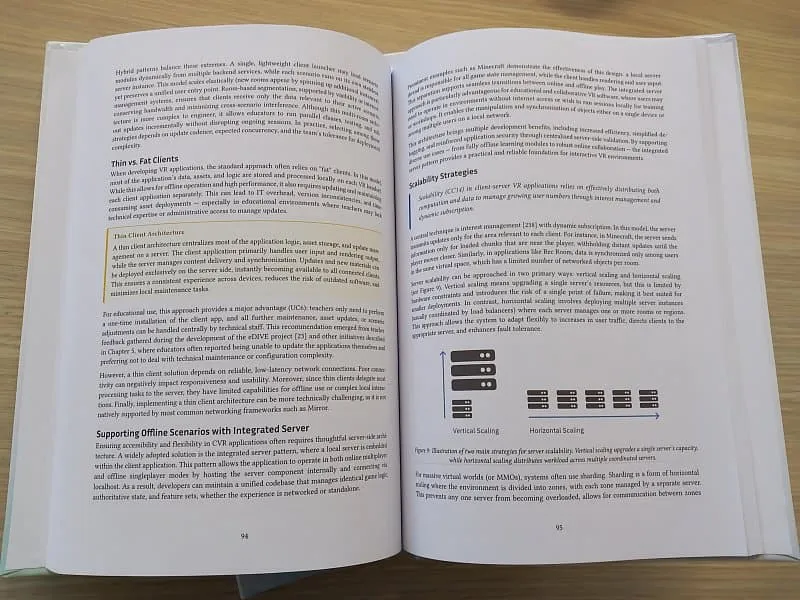
While it is standard practice at FI MU to submit a shorter dissertation formatted primarily as a collection of published scientific papers, I intentionally chose to write a comprehensive monograph. My goal was to synthesize all the accumulated research, user experience guidelines, and software engineering practices into a single, cohesive volume. This format allows the work to serve as a practical, concise reference for future VR creators, developers, and educational technology researchers.
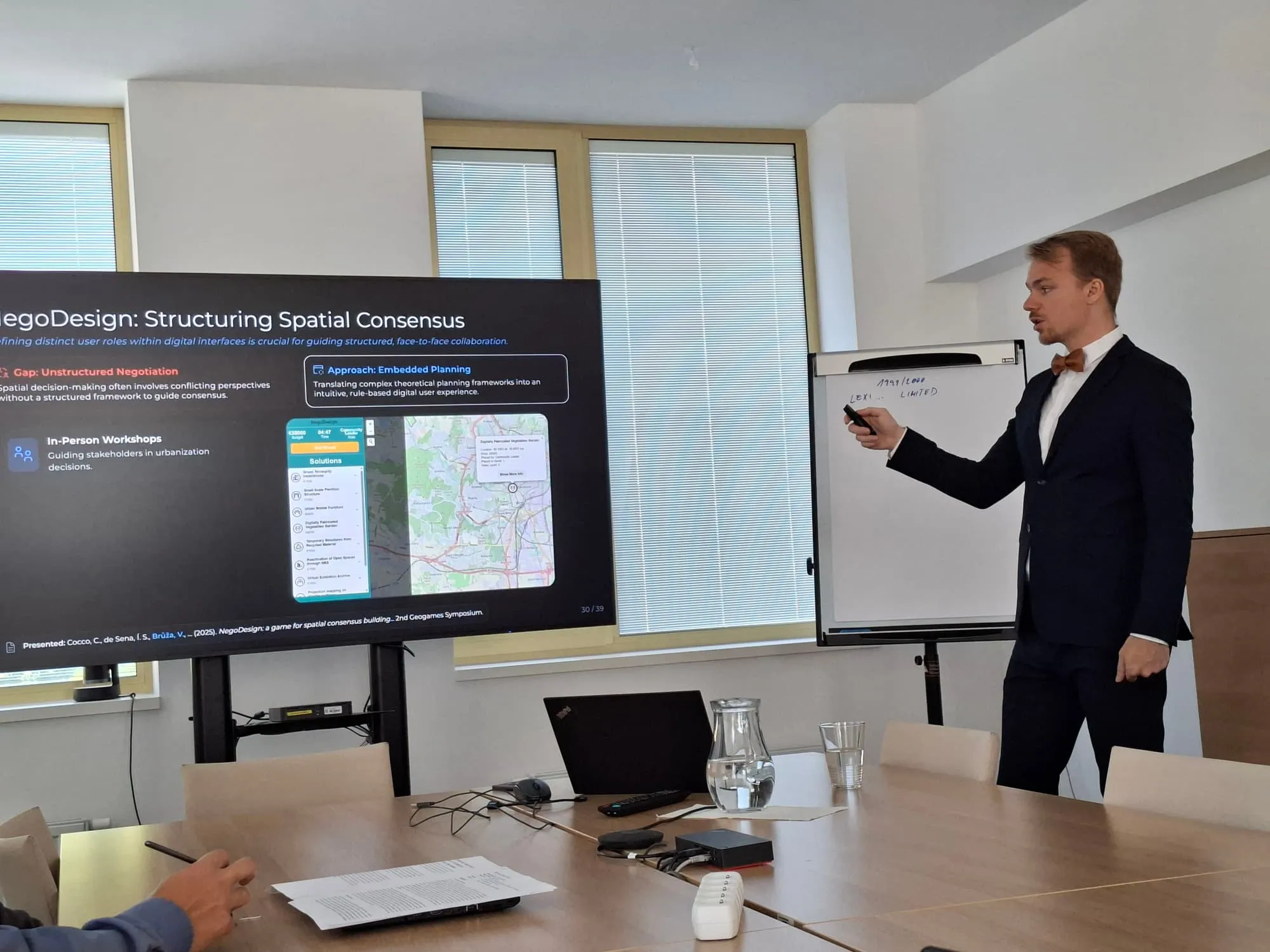
The full dissertation text is available online at Masaryk University, and here you can explore the interactive presentation used during my defense.