Design in VR for VR
Summary
A distance-learning university course focused on high-level UX/UI design for spatial computing. We built the curriculum from scratch and utilized ShapesXR to teach students how to prototype immersive applications without writing code.
Overview
In the Autumn semesters of 2023 and 2024, I had the pleasure of co-authoring and co-teaching a specialized university course titled “Design for VR” (DESB72) for The Department of Information and Library Studies (KISK) at the Faculty of Arts, Masaryk University. We built the entire curriculum from scratch specifically for their newly established distance learning program focused on Information Services Design.
While my usual teaching engagements heavily involve programming and technical implementations, this course was uniquely focused on high-level User Experience (UX) and User Interface (UI) design for spatial computing. The goal was to teach students how to think spatially and design intuitive interactions for Virtual and Mixed Reality, even if they had no prior coding experience.
The faculty was highly enthusiastic and wanted us to continue teaching in subsequent semesters, but unfortunately, due to other commitments, we no longer had the capacity to run it after the 2024 run.
Co-Teaching & The Backstory
I created and co-taught this course with Markéta Kučerová, a professional XR UX/UI designer. Our collaboration actually goes back several years and made us the ideal team to build this course together.
I first met Markéta when she was a student in my Game Design (PV259) class. She performed exceptionally well and later joined our teaching team for that very course. During the COVID-19 pandemic, we gained invaluable experience teaching together remotely, which perfectly prepared us for this distance-learning format. Following that, I acted as a consultant on her Master’s thesis, which focused on optimizing the UX for educators within my collaborative VR platform, eDIVE.
Her hands-on industry experience was invaluable in grounding the KISK curriculum in real-world design practices, while my role brought the developer’s perspective. I consulted on the technical feasibility of the students’ designs, drawing heavily on the interaction research from my PhD dissertation. I want to explicitly praise Markéta’s dedication; her friendly yet highly professional approach made this collaboration an absolute pleasure, and the student feedback consistently highlighted how well we complemented each other as a team.
Course Structure & Tools
Because the class was taught online for distance-learning students, we relied on a robust digital toolset to foster an interactive and engaging environment:
- ShapesXR: The primary tool used for the course. It acts essentially as a “Figma for VR,” allowing students to rapidly prototype 3D interfaces and interactions directly in spatial environments without writing code.
- Miro: We utilized Miro extensively as an interactive workflow hub. It served as a shared canvas where students could post screenshots, explore UX heuristics, find inspiration, and receive asynchronous feedback.
- MS Teams: Used for our bi-weekly online syncs, lectures, and consultations.
The Curriculum & Projects
The semester began with theoretical foundations — exploring why we use the term “XR” instead of just “VR,” dissecting how existing applications solve spatial UI challenges, and discussing the differences between traditional 2D design and spatial computing.
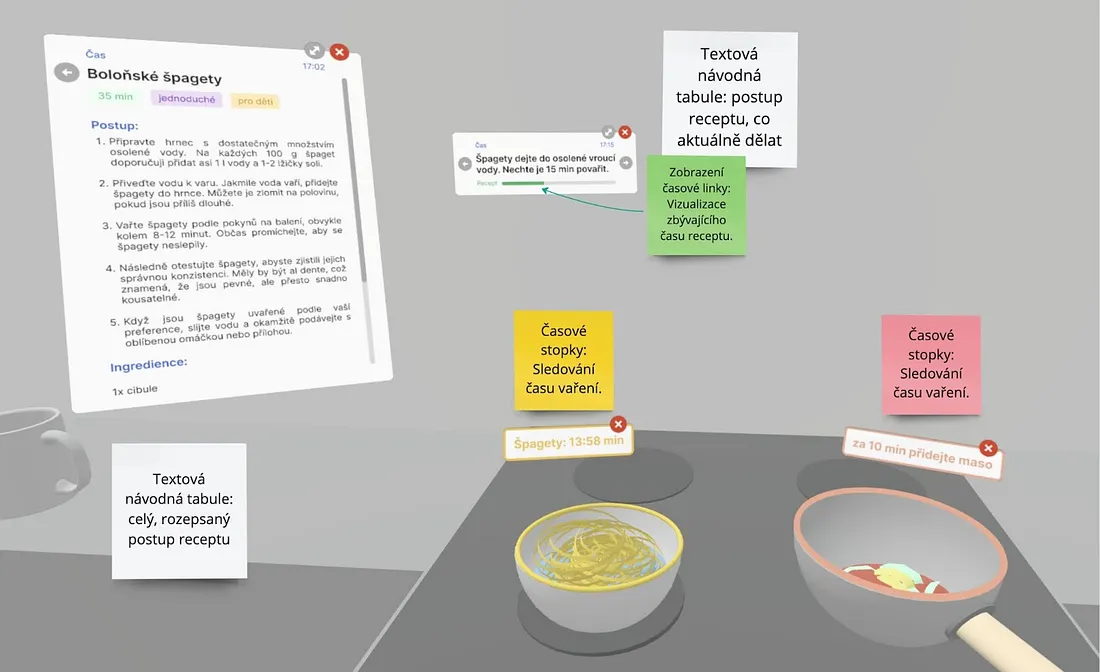
The second half of the semester was entirely project-driven. Students were tasked with designing an XR interface that solved a specific human problem. They had the freedom to choose their topics, which ranged from smart home MR overlays (like a “smart fridge” recipe assistant) to complex educational environments.
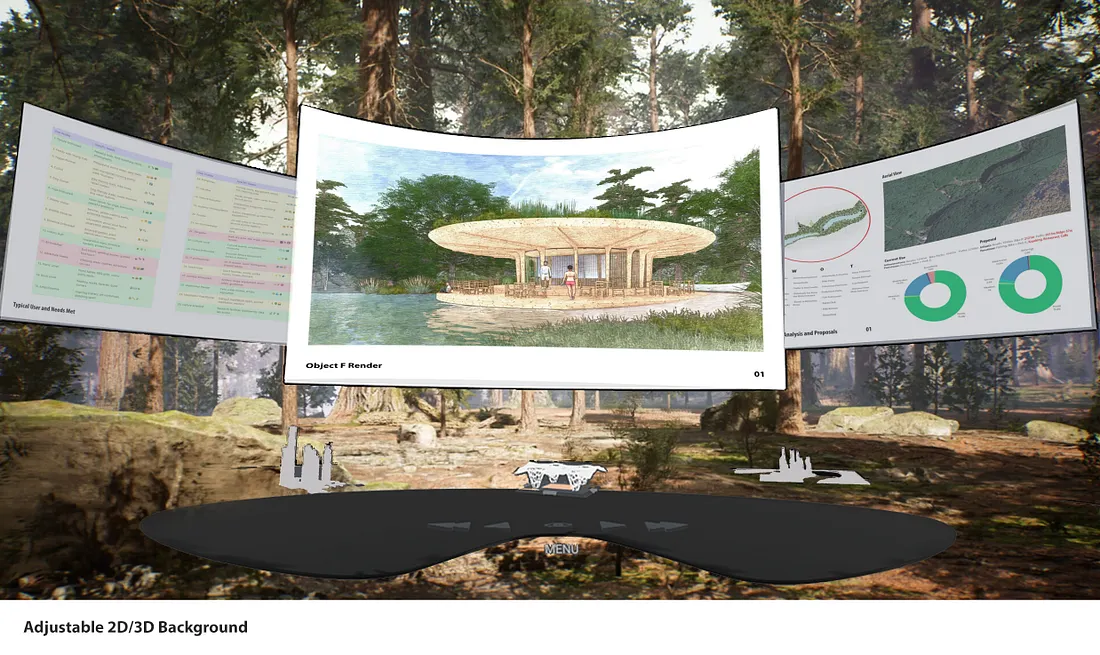
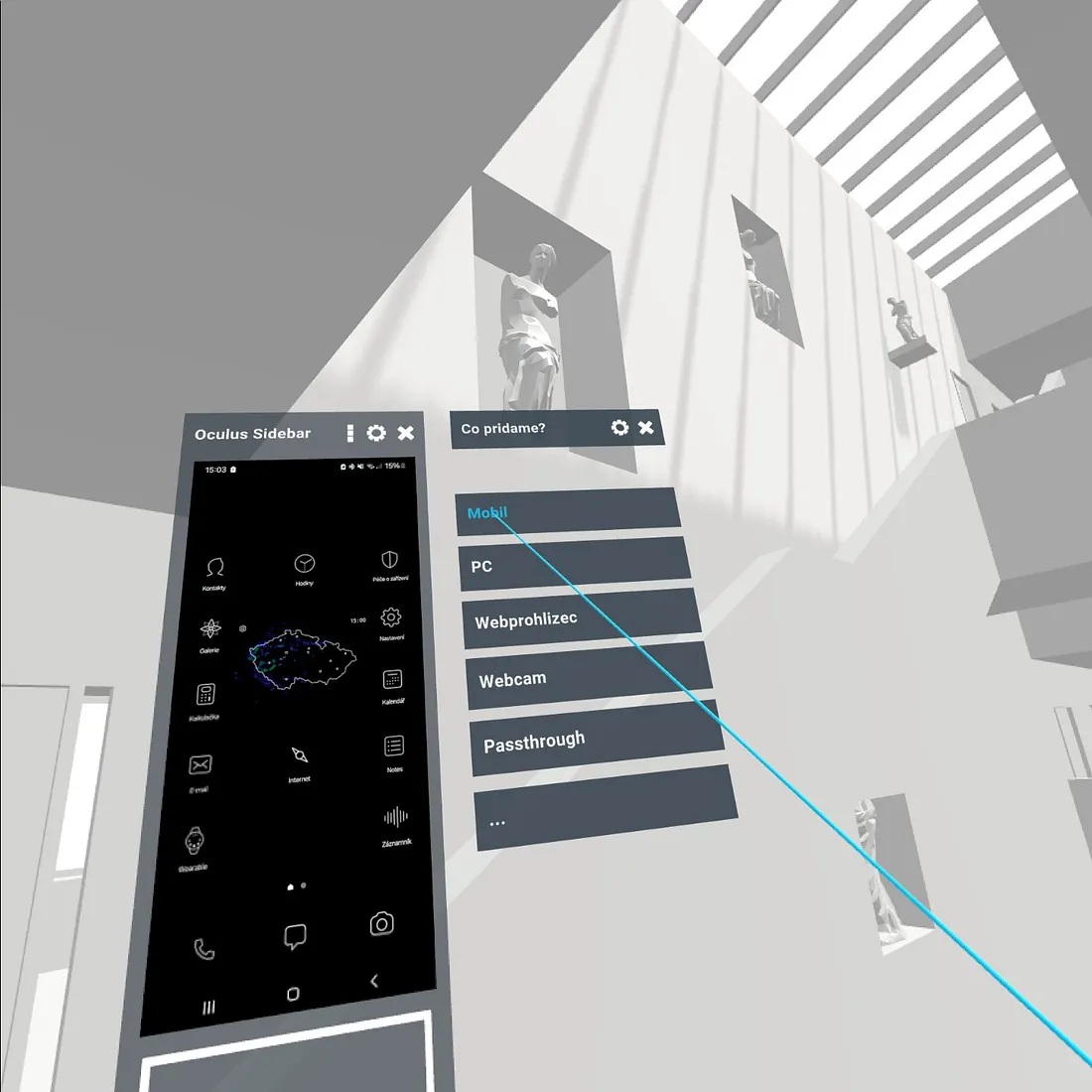
At the end of the semester, students documented their prototypes and design decisions. Markéta compiled an excellent summary of 10 selected student projects on Medium, which beautifully showcases the creative capabilities of the students. You can watch videos about their projects there or you can see a few images from their work directly here in the project gallery above.
Student Feedback
The reception from the students was overwhelmingly positive. Some highlights from their anonymous feedback include:
- “A great course - perfectly put together, engaging, and playful. It was the best VR course I had during my studies and honestly activated my interest in further VR research… Markéta and Vojta were always well prepared and provided ample feedback.”
- “A brilliantly prepared course without a single hesitation. A well-functioning workflow in Miro, which I regularly returned to… Thanks for the summary emails and consultations, which were plentiful and easy to sign up for.”
- “I will rate both teachers together because I think they make a super team where they complement each other nicely… they led the course with an overview and maximum emphasis on the result, which ultimately exceeded my expectations.”
This course stands as a highlight in my academic career, bridging the gap between technical XR development and human-centered design.